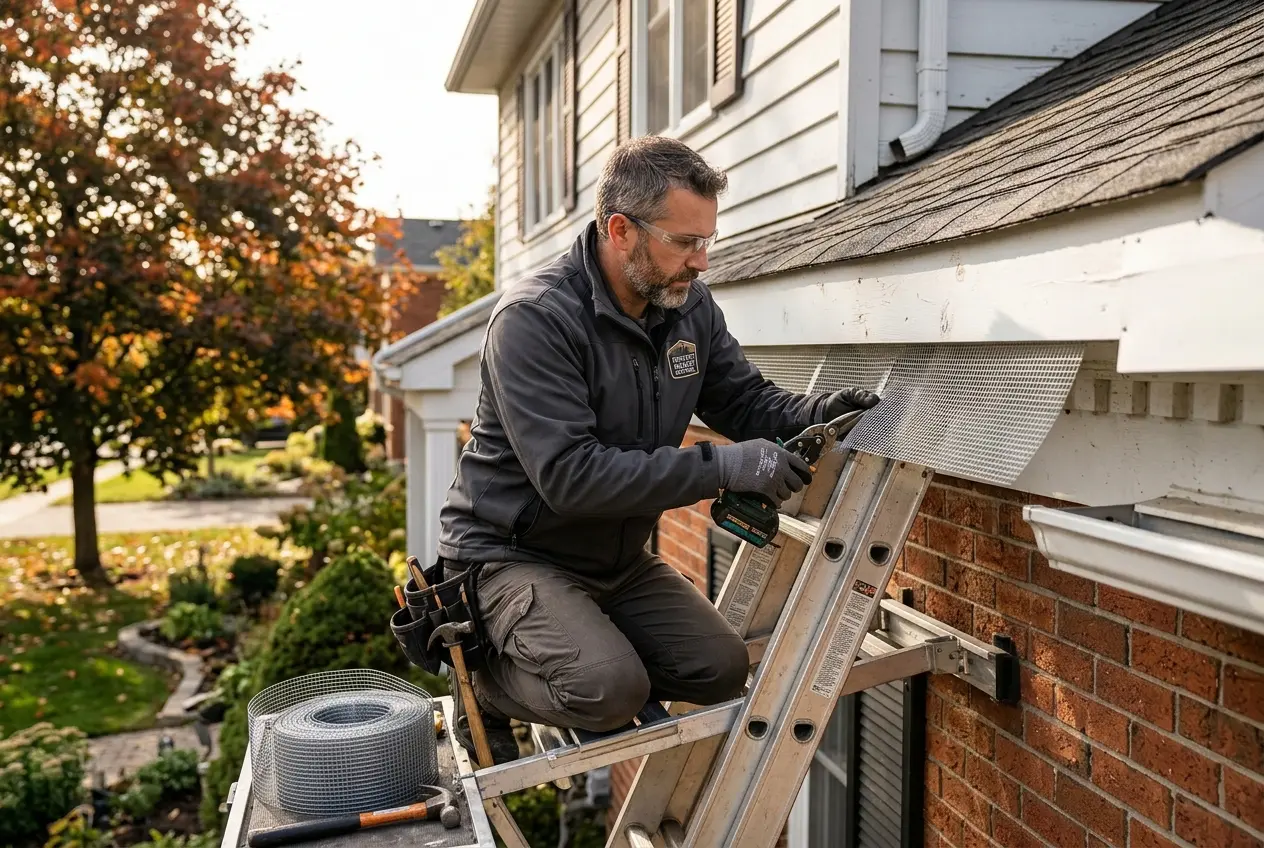
Tampa's urban wildlife—from raccoons in Seminole Heights to bats in Ybor City's historic buildings—can cause significant damage when they enter homes. Unlike companies that simply trap and remove, we focus on permanent exclusion by identifying and sealing all possible entry points with durable materials.
For active intrusions, we use humane trapping methods compliant with Florida wildlife regulations. Once animals are removed, we install one-way doors to allow any remaining juveniles to exit safely before final sealing. We then clean and sanitize affected areas—particularly important for attic spaces where droppings can compromise air quality.
Common projects include securing roof vents in ranch homes, reinforcing soffits on bungalows, and installing chimney caps on waterfront properties. We also trim tree branches that provide wildlife access to roofs—a frequent issue in Tampa's oak-canopied neighborhoods.
For active intrusions, we use humane trapping methods compliant with Florida wildlife regulations. Once animals are removed, we install one-way doors to allow any remaining juveniles to exit safely before final sealing. We then clean and sanitize affected areas—particularly important for attic spaces where droppings can compromise air quality.
Common projects include securing roof vents in ranch homes, reinforcing soffits on bungalows, and installing chimney caps on waterfront properties. We also trim tree branches that provide wildlife access to roofs—a frequent issue in Tampa's oak-canopied neighborhoods.
Our Process
- 01 Step 1: Inspection to identify all entry points and species involved
- 02 Step 2: Humane removal of present animals (when necessary)
- 03 Step 3: Installation of exclusion devices and temporary barriers
- 04 Step 4: Final sealing with animal-proof materials and habitat modification
Benefits
- Prevents property damage from chewing
- Reduces fire risks from gnawed wires
- Eliminates health hazards from droppings
- Humane solutions that comply with Florida law
Frequently Asked Questions
What's that noise in my attic at night?
In Tampa, nocturnal scratching usually means roof rats or flying squirrels. Daytime noises often indicate gray squirrels—we can identify by sound patterns during our inspection.
Will sealing my attic trap animals inside?
We use careful inspection and sometimes infrared cameras to confirm all animals are out before final sealing. One-way doors ensure no one gets trapped.
How do you prevent animals from just coming back?
We use heavy-duty materials they can't chew through and often install deterrents like predator urine or motion-activated lights for persistent cases.